Thursday, May 5, 2011

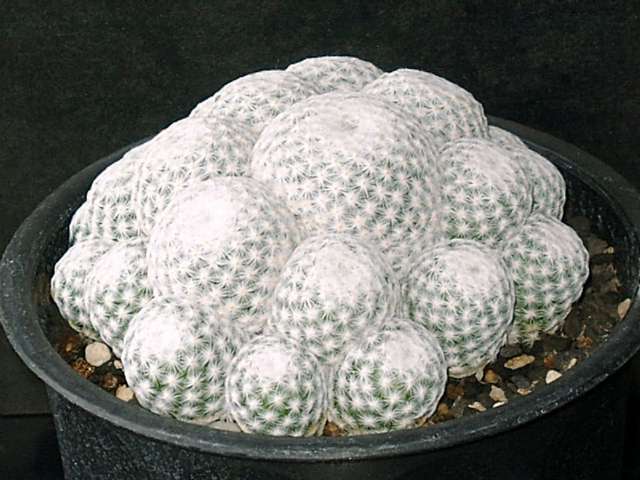
Notocactus/ Parodia Cacti

Notocactus/ Parodia Cacti

Most of favorite cactus have the origin in Africa, middle USA and Mexico but today, I’d like to introduce the cactus from South Africa: Parodia magnifica

Like other cacti, species of Parodia magnifica have developed means of reducing water loss. They have a thick waterproof cuticle that keeps water in and tries to keep pests and diseases out. Cacti have also recessed their stomata in deep pits over their bodies.

Scientific name:  Parodia magnifica

Synonyms: Eriocactus magnificus, Notocactus magnificus

Origin: Rio Grande do Sul, Brazil, Paraguay, Uruguay, Argentina

Habitat: The habitat where this plant come from can become very cold during the winter nights, often it will fall to just above freezing without harming the plants as it is also very dry.

Soil: Parodia/ Notocactus are found mostly on "islands" of low rocky hills found in grasslands and forests, growing between cracks in the rocks or in the shade of larger growing plants. The soil there is well drained and has a fairly high organic content, derived from the decomposition of other plants. 

So the proper soil for Parodia/Notocactus should be well-drained and have high organic content. 

Temperature: The habitat where Parodia/Notocactus come from can become very cold during the winter nights; often it will fall to just above freezing without harming the plants as it is also very dry. When growing at home it is best to avoid any frost as you may loose the plant but during the winter the temperature can be as low as 2C without any harm so long as the compost is very dry.

Watering: The plants in the cold country should be kept almost completely dry during the winter months, only water them to prevent the roots from completely drying out, once a month should be fine. From March onwards the plant will begin to grow and watering should be increased gradually until late May when the plant should be in full growth.

But I am in Thailand, warm location; I also water my cacti every 2-4 days upon the sun exposure and season.

Lighting: Grow most species of Notocactus in full sun during the summer and winter avoiding only the harshest summer sun. 

During the summer it is best to keep the plants outside. Keeping the plants in full sun will make them look healthier and will result in stronger and more colorful spination. If kept too dark they may become overly lush and could be prone to rotting due to over watering, they will also be shy to produce flowers.

As the sunshine here (Thailand) is severe, especially in summer, my greenhouse also has the shading net to reduce the sunlight and protect the plants to be burn.

Monday, April 18, 2011

Natural ways to get rid of ants


Ants, a small animal, prove to be beneficial to the gardener by feeding on destructive garden pests such as caterpillars, spiders and small insects. But, some species of ants like black garden ants live together with the aphids (for their honeydew). In such a case, ants are inviting a notorious pest in the garden.  Here are several natural ways to get rid of the insects in your garden.


1. Try a vinegar spray. 
Mix three parts vinegar with one part warm water, and spray around the perimeter of the garden. If you know where the ant hill is, you can spray the mound directly.

 2. Sprinkle freshly ground black pepper in your garden around your plants.
Ants won't cross it, and it doesn’t cause any harm to you plants.

 3. Ants hate any type of strong odor.
The pungent aromatic scent of mint leaves acts a natural pesticide for the ants. So, do not delay in planting mint in your garden so as to get rid of the troublesome ants. The permanent solution for garden ants is to grow and maintain mint plants throughout the year. 

 4. Shake out a line of baby powder around the garden.
For some reason, ants don't seem to like the smell, and won't go near any part of the garden that has a baby powder smell.

5. Find the ant hill, and pour corn meal on top of it.
Ants will eat the corn meal, but they can't digest it, so they will die. If you hate the idea of killing ants, put a jar of honey in a tree near your garden. The ants will relocate so they can be near the honey, and it will keep them.

6. Use Citrus Peelings 
Collect citrus peelings (orange, lemon, etc.) and ground them by using adequate amount of water. Remove the liquid concoction and spray it over the ant mound. This method is an effective natural remedy for getting rid of carpenter ants and other garden ants.

I don’t recommend the ways with boil water and boric acid because the boil water is too cruel to ants.  Imagine how you would feel if your body was burn by hot water.  Meanwhile, boric acid is chemical, I also am unsure about its side affect to the soil, plant even or my health.   


Friday, April 15, 2011

Another harmful part of cactus

I got the interesting question about the poisonous cactus.  After asking my friends who are the cacti great collector and searching the information., I found that beyond the sharp thorn, other harmful main part of cactus is sticky milk sap but not all cacti have the toxic sap.  Just only some of them have such sap.  Here is the list of cactus which has the harmful latex:

The desert rose (Adenium obesum) is a member of the dogbane family. Like many of its relatives, the  desert rose can exude a milky acrid sap when the stems or leaves are broken. This sap has cardioactive ingredients that can be dangerous if taken internally. Ingestion can cause abdominal pain and vomiting.

Some of the euphorbias or spurge species yield a milky latex. This can cause dermatitis in susceptible individuals. Avoid getting this in your eyes or bare skin, particularly if you have open sores or wounds. All parts of the euphorbias could be potentially poisonous if consumed. If swallowed, this can cause lesions of the mouth. Ingestion of the juice can also act as a purgative. In addition, gastrointestinal symptoms can occur.

Pachypodium is another member of the dogbane family. These often have a caudex. Bearing resemblance to a columnar cactus, this has thorns up and down the length of the stems. These thorns are modified stipules. They can be injurious, so be careful. Like the other dogbane relatives, this plant yields a poisonous sap.

Agaves, including the century plant and maguey, contains an irritating latex or sap. This can cause dermatitis in susceptible individuals.

Crassula argentea
Christmas candle is also known as candelilla. This is a species of pedilanthus. It is related to the euphorbias or spurges. All parts of the plant have a toxic white sap. Avoid getting this on your skin. It can cause severe dermatitis in susceptible individuals. If taken internally, it can bring on various gastrointestinal symptoms. These include diarrhea, vomiting, abdominal cramping, and nausea.

The baby jade (Crassula argentea) also has a burning, irritating sap. This comes from the leaves and all other parts of the plant. This latex can cause dermatitis.

Meanwhile, many of the Opuntia cacti have glochids (small hair-like spines) that can hurt someone who is unaware. It can make skin irritation.  (And really it’s difficult to get rid of the small spine from the skin.  I had every that experience before.)  The bunny-ear Opuntia is particularly deceptive because it looks so cute and touchable.  But the spine of some Mammillaria is OK.  Its spine is so soft like the teddy bear (Personally, I like to touch it when I feel upset.) 
my favorite mammillaria

So when working with these plants, especially if your hands have wound, protect them and arms with heavy, long sleeved clothing and gardening gloves.  If you are injured, seek medical attention. Watch the injured spot carefully for signs of infection.

Thursday, March 31, 2011

Cactus vs Fungus

Here are the fungus found normally in cactus.

1. Cactus Anthracnose (fungus – Colletotrichum (Gleosproium) spp): This disease affects several kinds of cacti, cereus, echinocactus, mammillaria, and particularly, opuntia (prickly pear). Infection results in a rather moist light brown rot that shows many light pink pustules on the surface. Spots are small at first, later enlarge, and become covered by the small spore-producing pustules. 
Large areas may be affected, sometimes destroying entire plants. No satisfactory control is available, other than removing and destroying diseased cladodes as soon as noticed. In the greenhouse, soil from infected plants should be removed and benches disinfected. Spraying with a copper fungicide may help in checking this disease.

2. Scorch or Sunscald (fungus – Henersonia opuntiae): This disease is common and
serious on prickly pear cactus (opuntia). Spots at first are distinctly zoned, later enlarging until entire cladodes turn a reddish-brown and finally die. The center of the disease area is grayish-brown and cracked. Other fungi may be present in the diseased area. No practical control has been developed.

3. Cotton Root Rot (fungus – Phymatotrichum omnivorum): Several members of the
cactus family are susceptible to attack by the cotton root rot fungus. Infected plants die.  When pulled from the soil the brown strands of the fungus can be found growing on the root surface. No control practice is available.

4. Scab (physiological): Particularly common on prickly pear cactus. Rusty colored, corky areas appear on the stems. Scab is thought to be a form of edema, resulting from over watering and poor ventilation. Increase light and decrease humidity for control.

What to do when cactus are infected?

  •        Quarantine and remove infected plant material.  
  •        Repot and cut off the infected area if it’s not severe and it’s possible to cut.  Cut behind the infection so that you can throw the fungus away entirely.  If it’s severe, destroy affected plants and their pots.
  •         Set the environment of your greenhouse or garden to be more appropriate for the cactus.  The causes of fungus are sometimes poor ventilation, light or humidity.
  •          Dust the both infected and healthy plant with Bordeaux mixture or another fungicide.  
Preventing the fungus 

1. Back the basic, pay attention and take care of your plants closely.  Mostly, the infection can invade your garden when you don’t have time to check or care the cactus.  (This case ever happened with me, too)

2. Get rid of the fungus/infection as soon as you find it.  The earlier to figure the fungus, the easier to control it.


3. Giving more time to spray the fungicide (every one or two weeks), repot and fertilize the plants.

Every plant is same; cactus, succulent, orchid, rose or else.  If you take care of it well, it will grow up greatly and make you proud


If you have any comment or question, please feel free to contact me :)

Monday, March 14, 2011

When is the time to repot the cactus???

Normally, we should repot the cactus at least once a year but if you want the cactus to grow faster, you may change its pot every 5-7 months upon the size and age of the plant.

However, somebody who is very lazy (like me) may repot when it’s really necessary.  When is it???  You can notice the good time to change the cactus pot when
Hard top soil

  •  Cactus size is too big for the pot 
  • Cactus is growing slowly
  •  The top soil is so hard 
  • Root on top soil
  • Cactus root’s is on the surface of the pot because there is no more food/fertilizers at bottom of pot.  (Sometimes, it’s true but I have an experience: one of my cacti grown on the surface.  At that time, I changed its pot and its root was still on the surface again.  I re-potted again and its root was still on the top of the pot.  I asked my cactus advisor and she said that’s the habit of that cactus.)

my Pachypodium
However, you should know about the dormant period of each cactus & succulent.  For example, my Pachypodium always leave its leaves and stop growing since October. It will have new leaves and grow up again at the beginning of rain season (about May).  So I repot it before May.  Dormant plants are weak and can't really defend themselves against infection.  Meanwhile, any damage done to the roots during repotting will be dangerous to the plants.

Right Season to do it

Normally, I’d recommend before or at the beginning of the rain season because it’s not too dry or too wet.  And the new pot can support the plant growth in the rainy but you should be careful about the infection and being rotten if you repot during the rain season.  So please change the pot before the rain comes.

However, that’s the general suggestion.  You should understand your plants well.  There are some species that can tolerate every thing you’ve done with them, but others could not truly tolerate any stress.  So please pay attention and time to observe your cactus.

Monday, February 21, 2011

Mammillaria herrerae Care

Scientific name:  Mammillaria herrerae
Origin:  Queretaro, Mexico
Habitat:  It grows mainly in open places between grasses and calcareous rocks, in association with other cactus species like Echinocactus grusonii, Ferocactus hystrix and Thelocactus leucanthus.  


Description: It is small growing cactus that look like a little golf ball.  It usually stays solitary, or occasionally clusters from the base.
Stems: Globose or slightly elongated as it ages, 2 - 3.5 cm in diameter and height. (In cultivation it can grow very slowly up to 8 cm tall)
.  Without latex.
 
 Flower: Diurnal, quite large for a Mammillaria, pale pink to red-violet, 20 - 25 mm long and very showy.
Blooming season (Europe): April to May, it starts flowering when it gets to be 5-7 years old, and reaches at least 3 cm in diameter.

Lighting: 
Requires maximum sun exposure to reach its full potential, and  to achieve success in flowering 


Cultivation: This plant isn't famous for being easy to cultivate, but in good conditions with excellent ventilation, it grows without difficulty.  It is especially sensitive to overwatering. So careful watering and an open mineral potting soil are a must.  Avoid the use of peat or other humus sources in the potting mixture.  


Don't add limestone to the potting mix (which must be moderately acidic).  It can be sensitive to frost (but if dry they are resistant to -5° C).   A winter rest that allows the plant to shrivel (perhaps losing up to 25% of its summer height) will encourage flowering and long time survival.  Be careful to encourage slow growth.


Propagation: Direct sow after last frost. (it usually doesn't  produces offsets).


Tuesday, February 8, 2011

Make a self-watering container

Have you ever got a problem who would water plants when you're away or had a holiday? Here, I've the video showing how to make a self-watering container simply.


source: Videojug