Tuesday, December 28, 2010

Peat moss: use and benefit

What is peat moss?
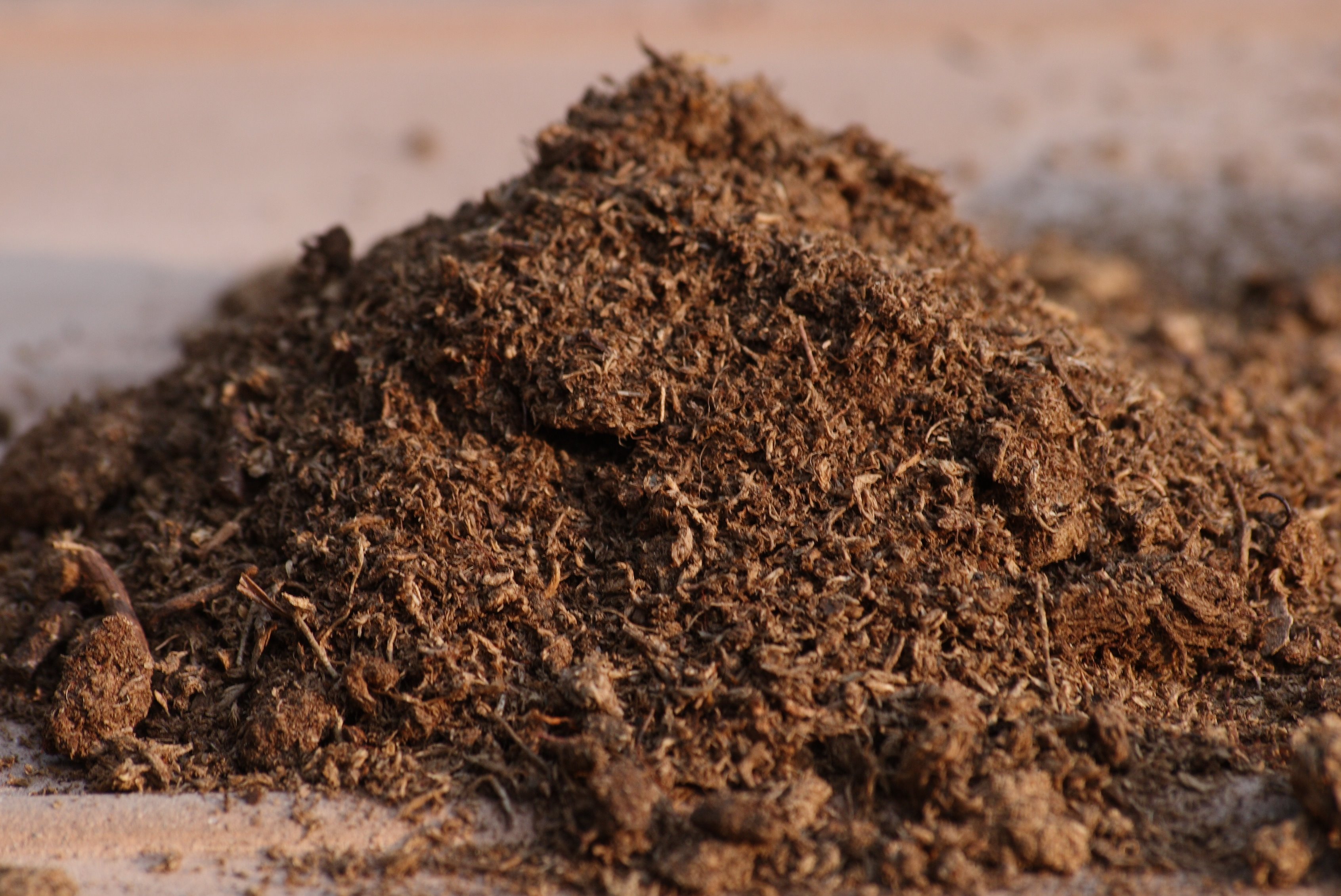
Peat Moss, as used in gardening, is a fibrous, decomposed remains of these certain types of moss, which are found in very wet areas of the country. It is a highly prized natural plant food and can be used as a covering or mulch like substance for seeded areas.
Why should we use peat moss?
Peat moss has many benefits to plants and especially, it’s very helpful to seed the cactus & succulent.  

- improve compost

-    condition the soil : Peat moss is ideal for improving the texture of the soil, and when  added to garden soil it will stop nutrient runoff from occurring by holding water and nutrients in soil.

- Adding peat moss to clay soils can help break down clay by aerating it and applying peat moss to sandy soils will help bind it and retain nutrients rather than leach them.


I was told by a cactus experts that he used the peat moss and pumice (volcanic rock) when he seed the cactus.  That would increase the survival rate of the baby cactus.  But the peat moss would be dry quickly so you should often water the cactus with peat moss.
By the way, coconut fibre can uses as a valid substitute for peat moss. It has many of the same qualities inherent in the moss yet is more environmentally friendly. Coconut fibre is sourced from the husk fibres of coconuts and has given some hope for normally what is seen as a waste product.  
I cover the top of soil of the flower and the vegetable with the coconut fibre  as it can keep moisture in the soil.  But for the cactus & succulent, coconut fibre is not the good choice because coconut fibre holds water in the pot and that can cause the plants being rotten.
Where to find peat moss?
In local farm supply, outdoor or gardening section of most department stores

Wednesday, December 8, 2010

Human urine as organic fertilizer

Generally, urine is the liquid waste from our body but in the Asian agriculture, it’s common to use urine as a good source of nitrogen and other minerals and, providing it is used correctly, is completely safe.  The research at University of Kuopio's Department of Environmental Sciences in Finland assumed that the nitrogen contents of human urine could be a good fertilizer for many other plants or crops.  

The study said that the cabbage fertilized with urine was compared with similar plots of cabbage that either went unfertilized or where commercial fertilizer was used. At harvest, the cabbage enriched with the urine had several advantages: It was slightly larger, it grew to its maximum size more quickly, and, for most of the growth cycle, it suffered less bug damage than the commercially fertilized variety.

I tested to water with the mixed urine 2 times a week in the morning and now, my plants (such as vegetable, roses, orchid, cactus and etc.) grow well and quickly like they do in the rain season. 

How to keep and use it
  • Keep it separate. The golden rule with urine use is to keep it separate from other bodily wastes. Urine is clean and needs to be kept that way. Pee in a bottle, or invest in a urine-separating toilet.
  • Dilute urine with water at 1: 10.  The pure urine is too strong and salty to be used neat on plants.    
  •  Use it fresh. We all know that stale urine smells. That's ammonia, and it's made from nitrogen. The smellier your collected urine, the less nutritious it will be for your plants, as well as being unpleasant to apply.
  •   Water at the roots. It's good practice when watering not too splash the leaves, but to water at the roots. This saves on evaporation, and dry leaves are much more resistant to disease.
  • Feed hungry plants. The plants that will benefit most from urine fertilizer are the ones with the highest nitrogen requirements. Try it on leafy vegetables like cabbages and cauliflowers, corn, or anything that needs a quick pick-me-up.
Other use. 

Neat urine is too strong to be used directly on plants, but it can be used as a weedkiller; a few applications, especially if used on hot days, should finish off your weeds. It can also be used neat as a winter spray for fruit trees, to discourage fungal diseases.

Using urine is the real organic gardening: it is a relatively clean substance.  You can save money, fossil fuels (used extensively in the production of chemical fertilizers) and water (no need to flush!).   

Thursday, October 21, 2010

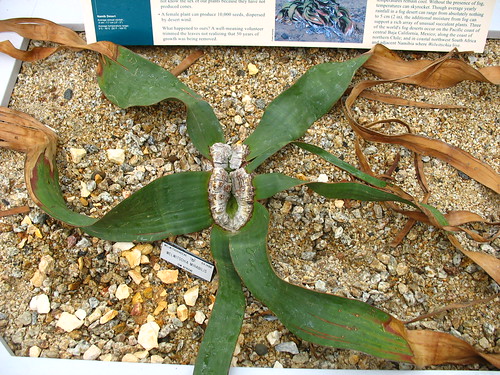
Welwitschia mirabilis - one of "most bizarre plants on earth."

Welwitschias are extraordinary plants and certainly rank among the top ten list of "most bizarre plants on earth." 
Welwitschia is a monotypic genus of gymnosperm plant, composed solely of the very distinct Welwitschia mirabilis. The plant, which is considered a living fossil is named after the Austrian botanist Friedrich Welwitsch who discovered it in 1859. The geographic distribution of Welwitschia mirabilis is limited to the Namib desert within Namibia and Angola.
Welwitschia grows from a short, thick, woody trunk, with only two leaves that continuously grow from their base, and a long, thick taproot. After germination, the cotyledons  grow to 25–35 mm in length, and are followed shortly afterward by the appearance of two permanent leaves.
These leaves are produced opposite of the cotyledons, and continue to grow throughout the entire life of the plant. They eventually grow to a length of 2–4 m and usually become split into several strap-shaped sections.  The species is dioecious, with separate male and female plants. Fertilization, that is, the transfer of the pollen from the male to the female strobili, is carried out by insects that are attracted by "nectar" produced on both male and female strobili
Watering: The plant absorbs water through structures on its leaves, harvesting moisture originating from dew that forms during the night.
Light: Welwitschia mirabilis needs full sun but it should be under roof when it rains.  So it will be great if Welwitschia mirabilis locates in the greenhouse.
Soil: normal soil for cactus and it should be well-drained.  If its leave becomes yellow, it means that you water too little.
Propagation: Welwitschia mirabilis is propagated from seed. Fresh seed will germinate in 45-60 days at 85°F (30°C).


Friday, October 1, 2010

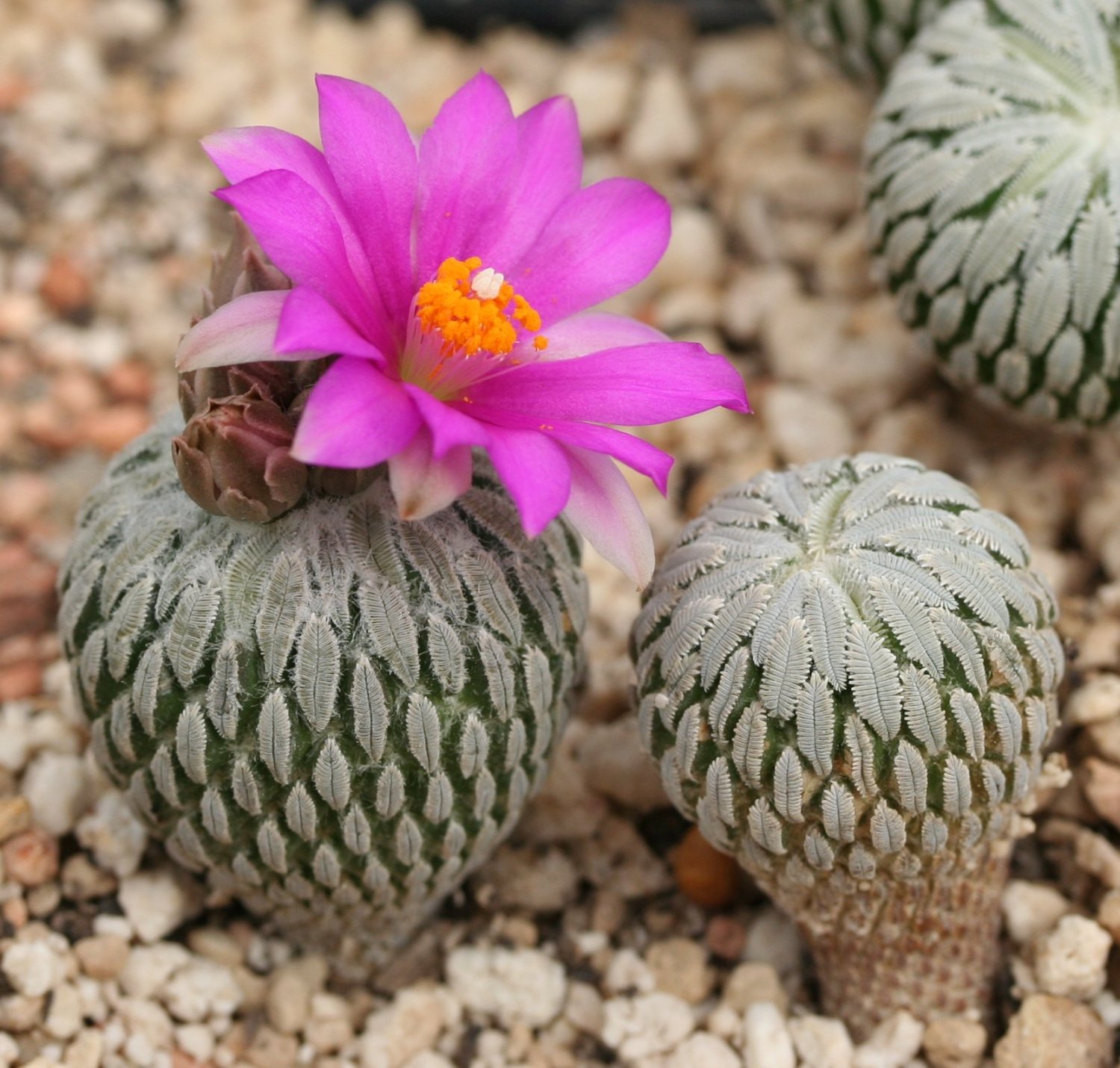
Pelecyphora aselliformis

P. aselliformis is a well known medicinal peyote sold in the markets of San Luís Potosí, Mexico, and is used as a remedy for fevers and rheumatic pains. Extracts have also been shown to have antibiotic activity.  As this plan grows very slowly, therefore, it is usually grafted and rare.   So P. aselliformis may be a challenge for cactus collectors to grow it successfully.

Scientific NamePelecyphora aselliformis Ehrenberg
FamilyCactaceae 
Synonym: Mammillaria aselliformis, Anhalonium aselliforme, Ariocarpus aselliformis
Common name: Peyotillo, hatchet cactus, woodlouse cactus.
Origin: Mexico (San Luis Potosí - around the city of San Luis Potosí, above 6000 feet (1800 m))

Minimum Avg. Temperature: 50°F (10°C)

Sun Exposure: P. aselliformis needs a very well drained soil and requires strong sun to part sun to develop good spinal growth. You can grow this plant in the shade of bushes and don’t get direct sun at midday.  

Watering Needs: Watering should be rather infrequent, to keep the plant compact and not become excessively elongated and unnatural in appearance. Keep dry in winter, or when night temperatures remain below 10° C (but some people give this plant a light monthly watering to prevent the drying and shedding of the lower tubercles.) it is hardy to -4°C for a short period.  

Flowers: Pink to violet flowers with lighter outside petals, 2 - 3.5 cm in diameter. The floral buds are acuminate and appear on the apex. 

Blooming season: It normally flowers from February till October
, but only if the sunlight is strong enough.

Propagation: It can be reproduced both by seeds and cuttings, but it is often grafted because difficult and slow to grow on its own roots. Older specimens shoot tillers from under tubercles, so they can be grafted, which is a much easier way of propagation than sowing. Young seedlings are tiny and they need several years to reach adult size, and require  close care.

Source:

Friday, September 10, 2010

Idea for Green House in Apartment

Here is the good idea of small Green house for people who don't have many spaces and budget for cactus green house.  You can adapt the idea with your home.


Cardón cactus - World's Largest Cactus

Cardón cactus or Pachycereus pringlei (official name) is the tallest cactus species in the world, with a maximum recorded height of 21 meters (70 feet) high and weigh up to 25 tons.  Cardón  grows very slowly and is long-live. Many specimens live well over 300 years. Therefore, Cardón is not the popular cactus and usually founded in the dessert more than in the green house.


Cardón is a species of cactus, native to northwestern Mexico in the states of Baja California,Baja California Sur, and Sonora. You can also find a similar species in the Canary Islands (Spain), Euphorbia canariensis also known as Cardón.  Don't be confused with the Saguaro  (Carnegiea gigantea).  Although Cardón and Saguaro look similar, they are different: most Saguaro are found in the Sonoran Desert and they have fewer ribs on the stems, in being more heavily branched from near to the base of the stem, and in the location of the blossoms. 

The cardón are especially spiny when they are smaller, protecting them from predators. As they grow older, many of the spines fall off and are not replaced. The lower trunks of older plants turn gray, and a cracked, woody bark makes them look like the thick legs of an elephant. Woody vertical ribs allow the columnar cactus to expand and contract like an accordion, storing the water it needs to survive in the arid conditions. These cacti have developed extensive, shallow root systems which quickly capture the brief, but torrential rains of the region. In order to support this great weight, the large cactus has an interior framework of hardwood vertical rods, lightweight, yet extremely strong, which act to stiffen the ribs. This amazingly tough hardwood skeleton has allowed the cardón to become the largest cactus species, able to thrive in the very harsh climate of the Baja California's Sonoran Desert.

Friday, August 6, 2010

Cactus Farm in the industrial style

Let see the industrial cactus farm with automatic machine in Netherlands.